
Transforming Hospitality Design with FRP Planters
Elevating Cafe Interiors, Traditional Dining Spaces, and Al Fresco Courtyards through Biophilic Architecture
Introduction: The Biophilic Shift in Modern Hospitality
In the competitive world of hospitality, interior ambiance dictates customer retention just as much as the menu. Today’s diners look for immersive, organic environments that offer a momentary escape from concrete urban life. This shift has placed biophilic design—the practice of integrating natural elements into built environments—at the center of modern commercial architecture.
Among all decorative elements, planters serve as the anchor of living architecture. However, heavy concrete pots or fragile terracotta containers are rapidly becoming obsolete in commercial spaces. Enter Fiberglass Reinforced Plastic (FRP) planters—the definitive material choice for modern cafes, bistros, and high-end restaurants.
Core Features: Why FRP Planters Outperform Traditional Materials
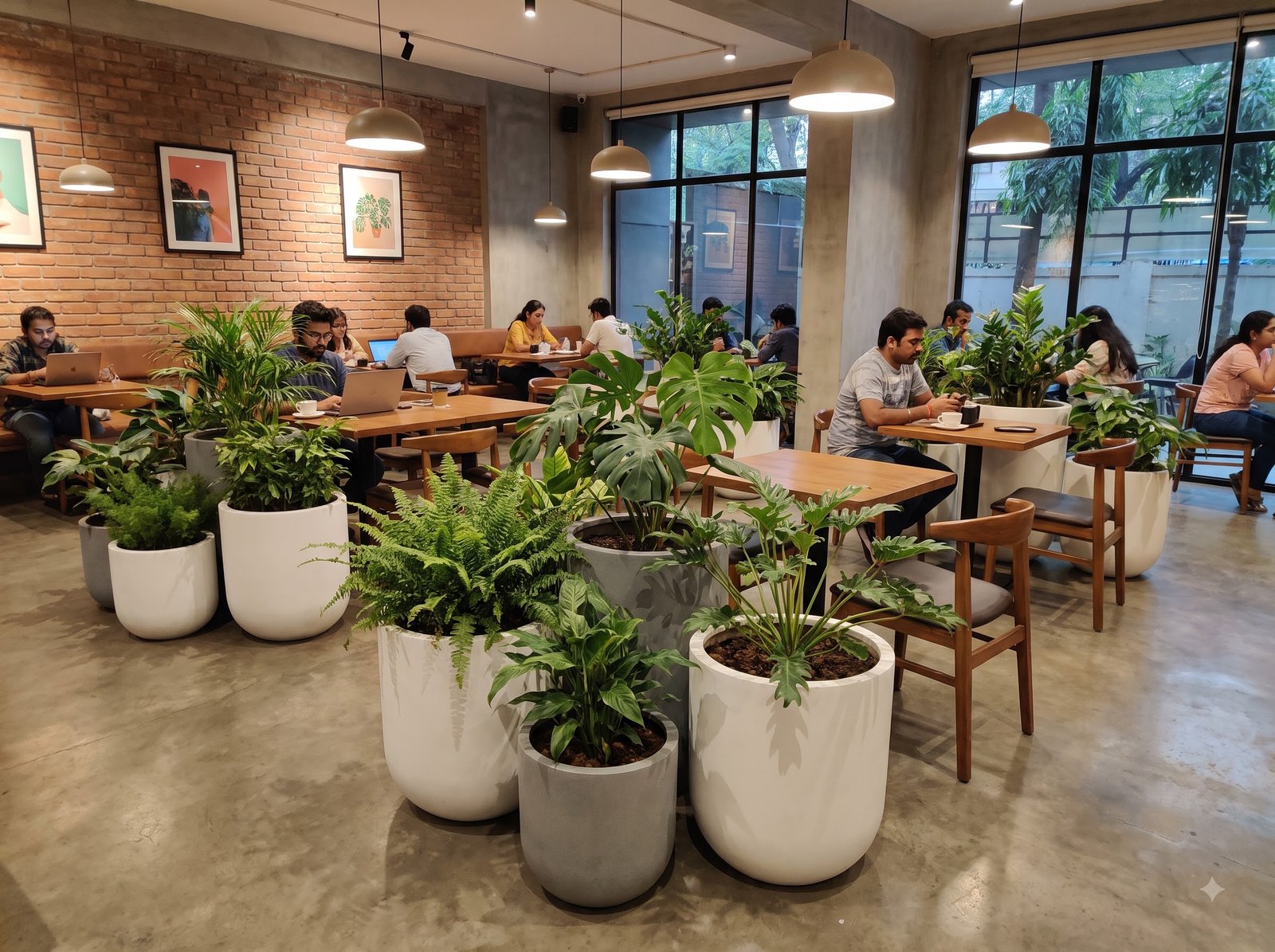
Commercial spaces demand materials that balance high aesthetic value with extreme structural resilience. FRP planters deliver exceptional performance across several key metrics:
- Unrivaled Strength-to-Weight Ratio: While mimicking heavy concrete or stone, FRP planters remain lightweight for easy layout adjustments.
- Weather & UV Resistance: Engineered to endure intense sun exposure and heavy precipitation without cracking, fading, or structural fatigue.
- Moisture & Chemical Immunity: Unlike timber or metal containers, fiberglass resists rot, rust, and soil chemical interactions completely.
- Custom Architectural Finishes: Available in sleek matte white, charcoal gray, textured concrete looks, and custom branding colorways.
Application 1: Minimalist Cafe Interiors & Urban Coffee Houses
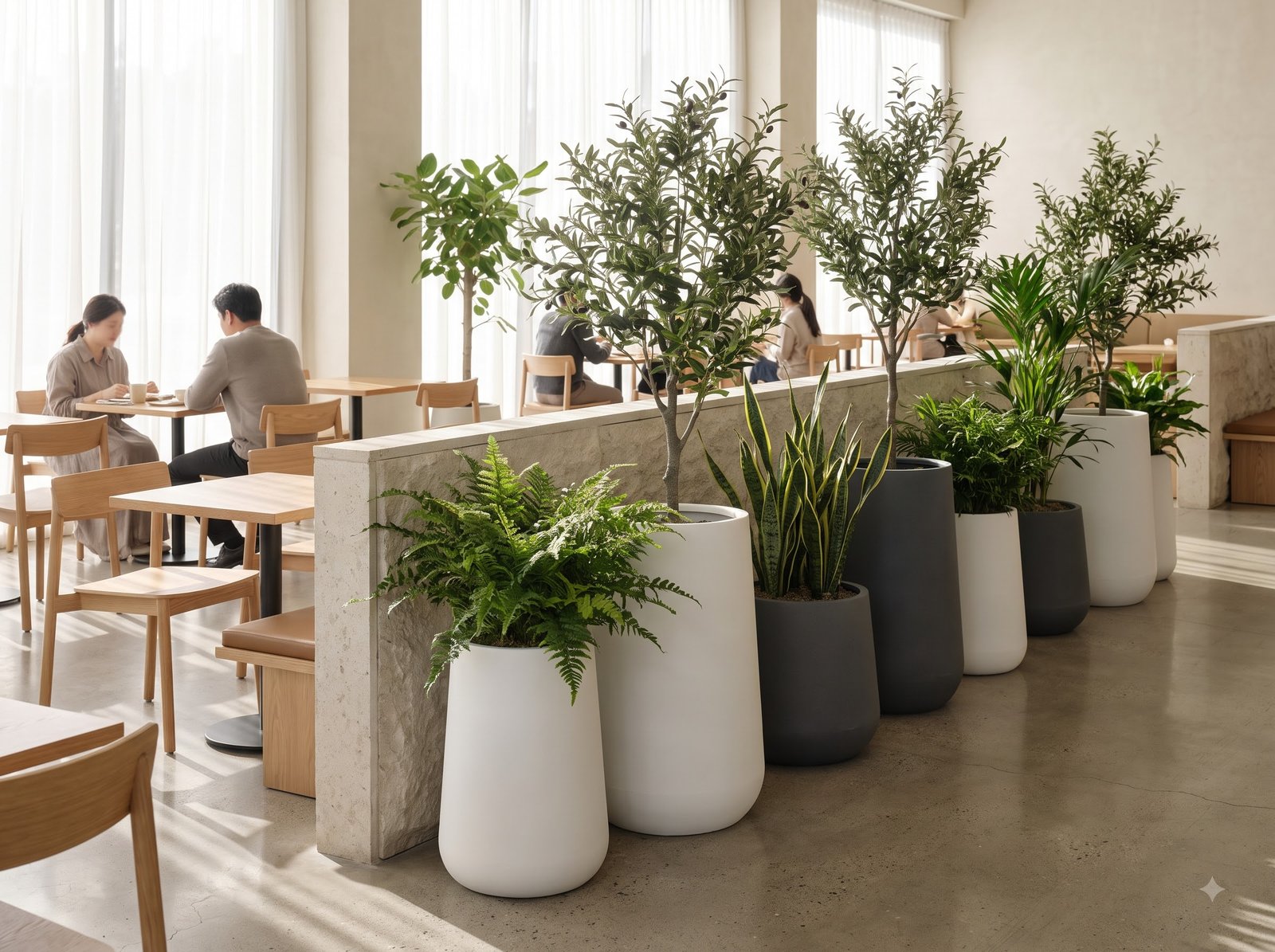
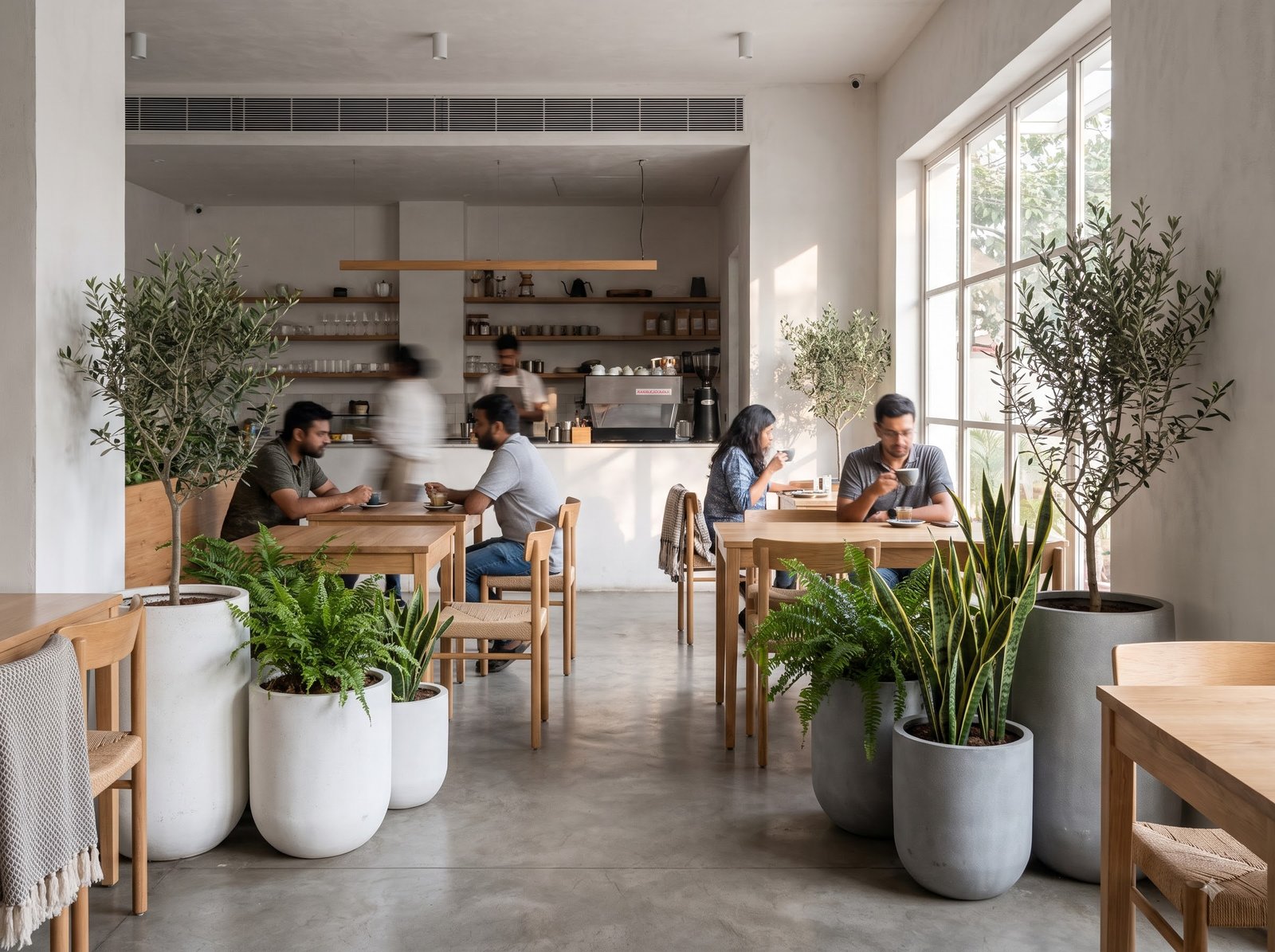
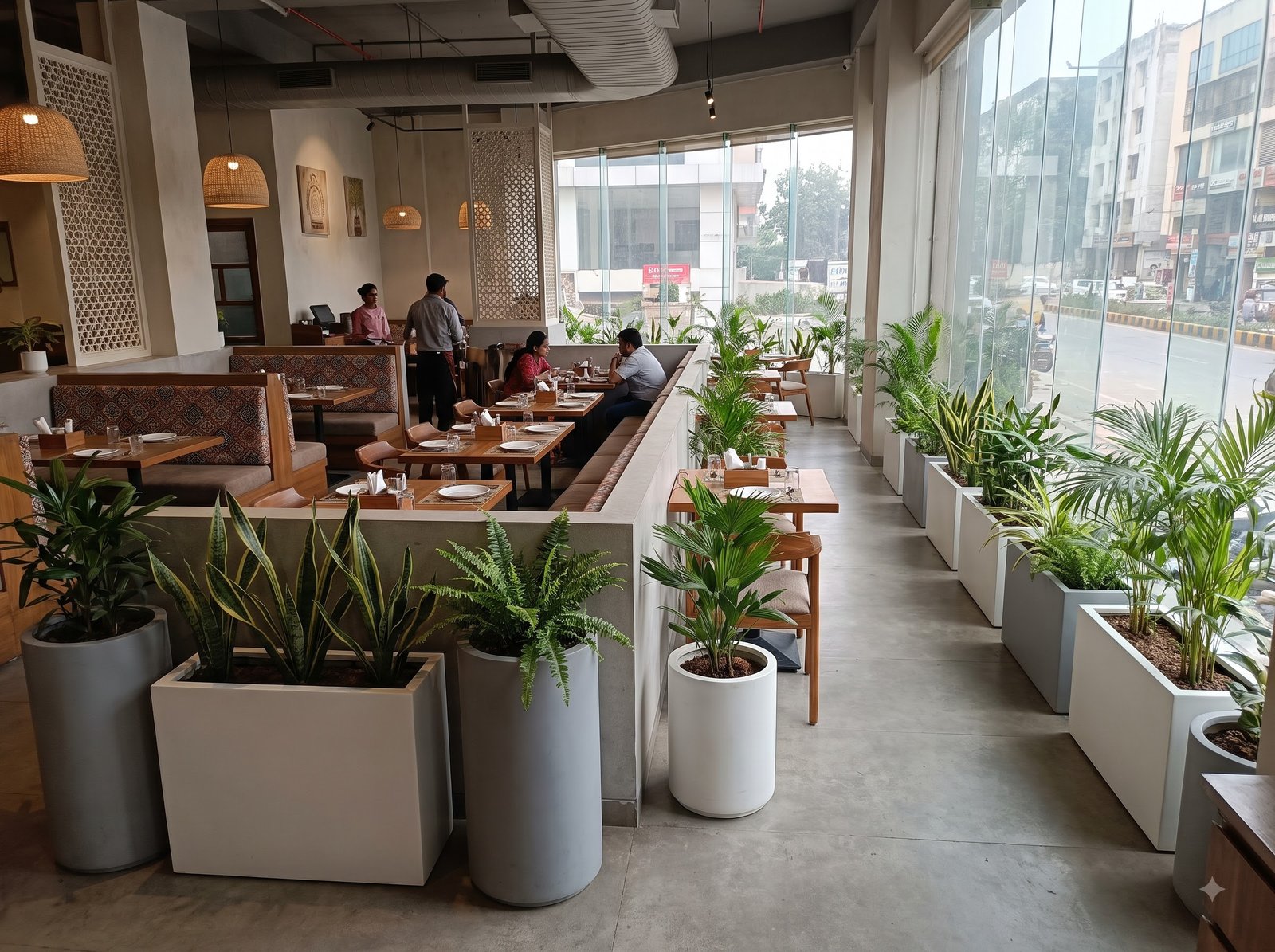
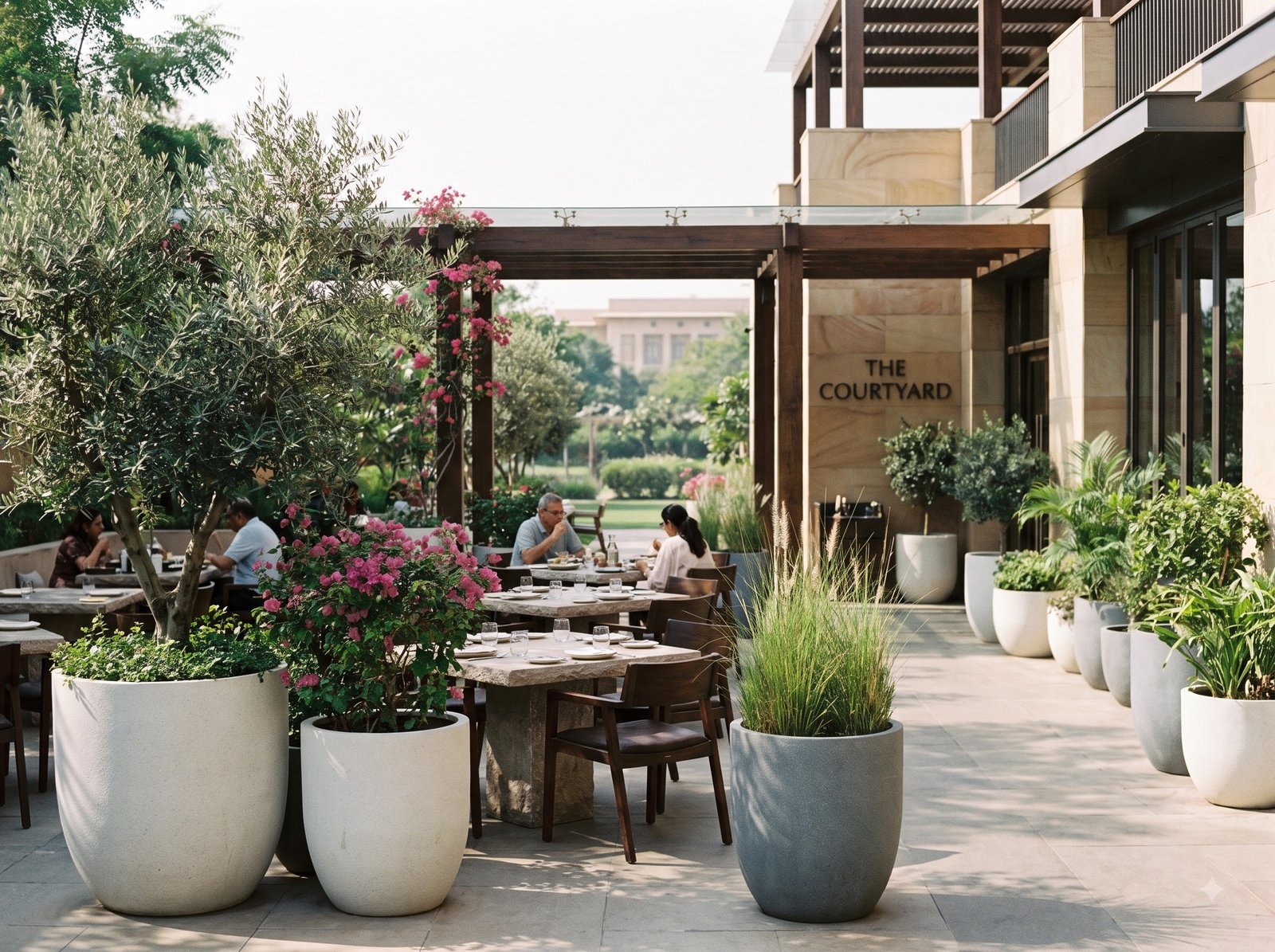
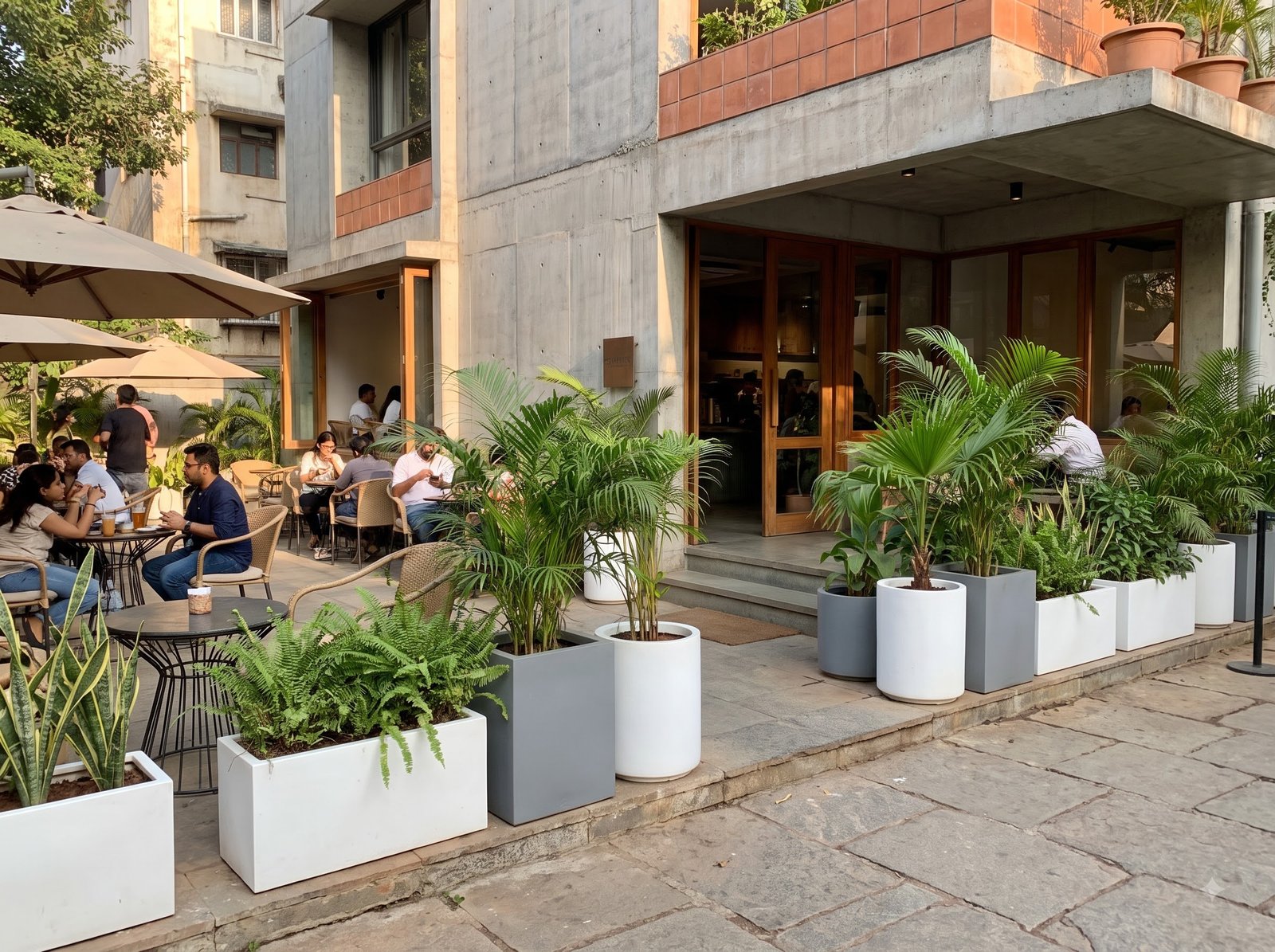
Minimalist cafe design relies on clean lines, neutral color palettes, and uncluttered sightlines. In these spaces, oversized cylindrical and tapered FRP planters introduce a soft organic contrast against polished concrete floors and light wood tables.
By housing specimen plants like olive trees or upright snake plants, cafes can create intimate seating pockets without building rigid permanent walls.
Application 2: Traditional & Contemporary Restaurant Layouts
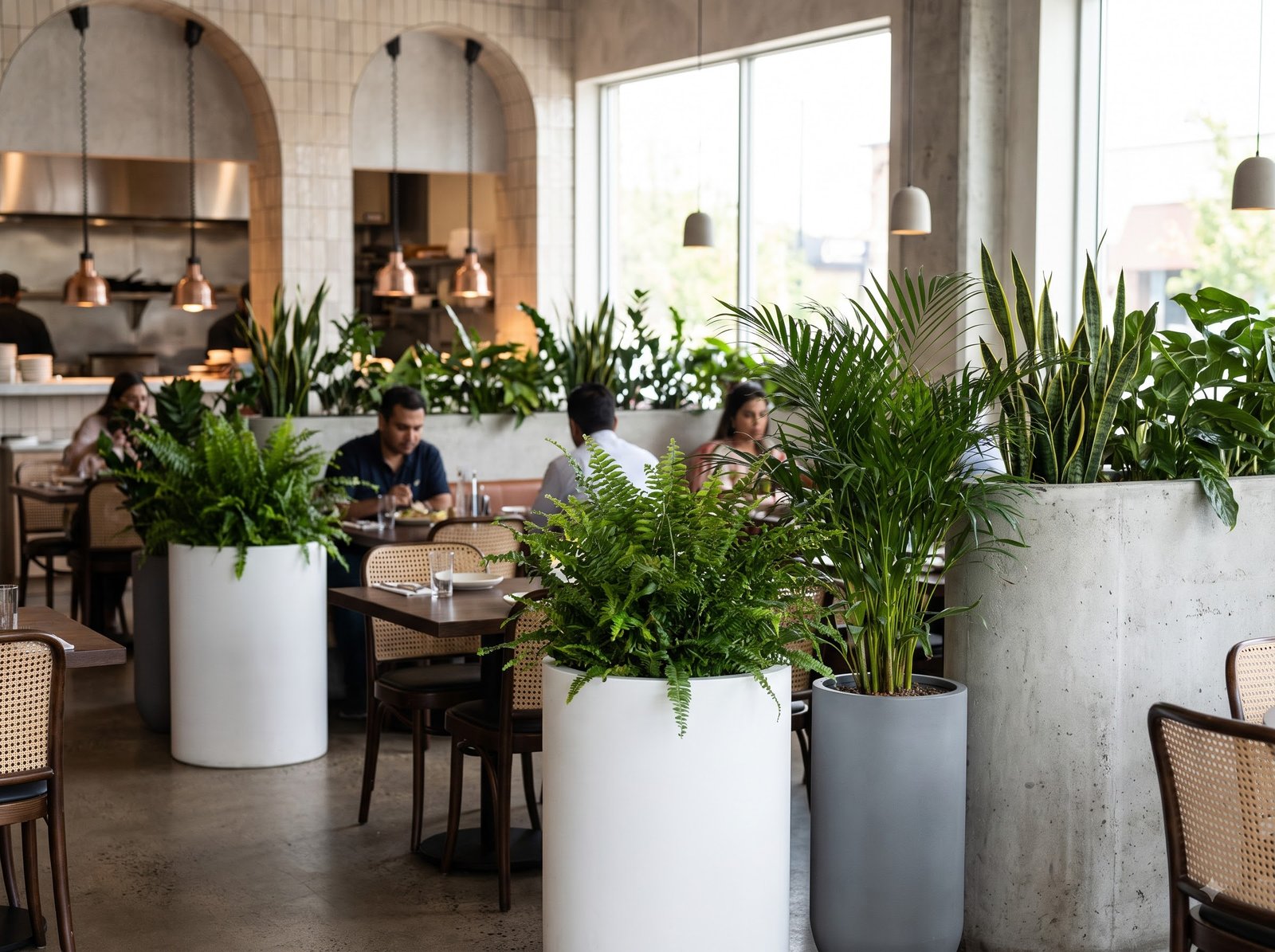
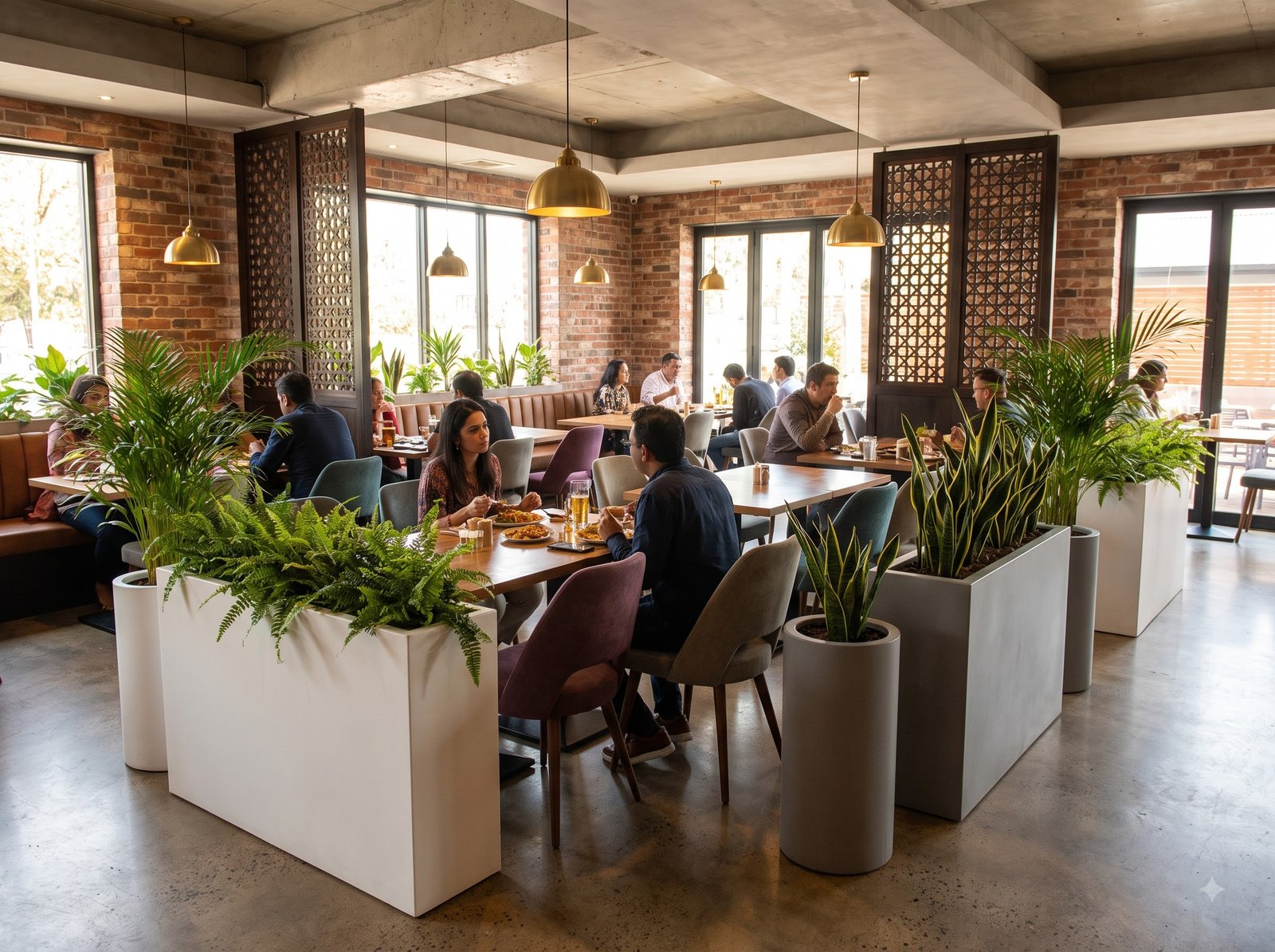
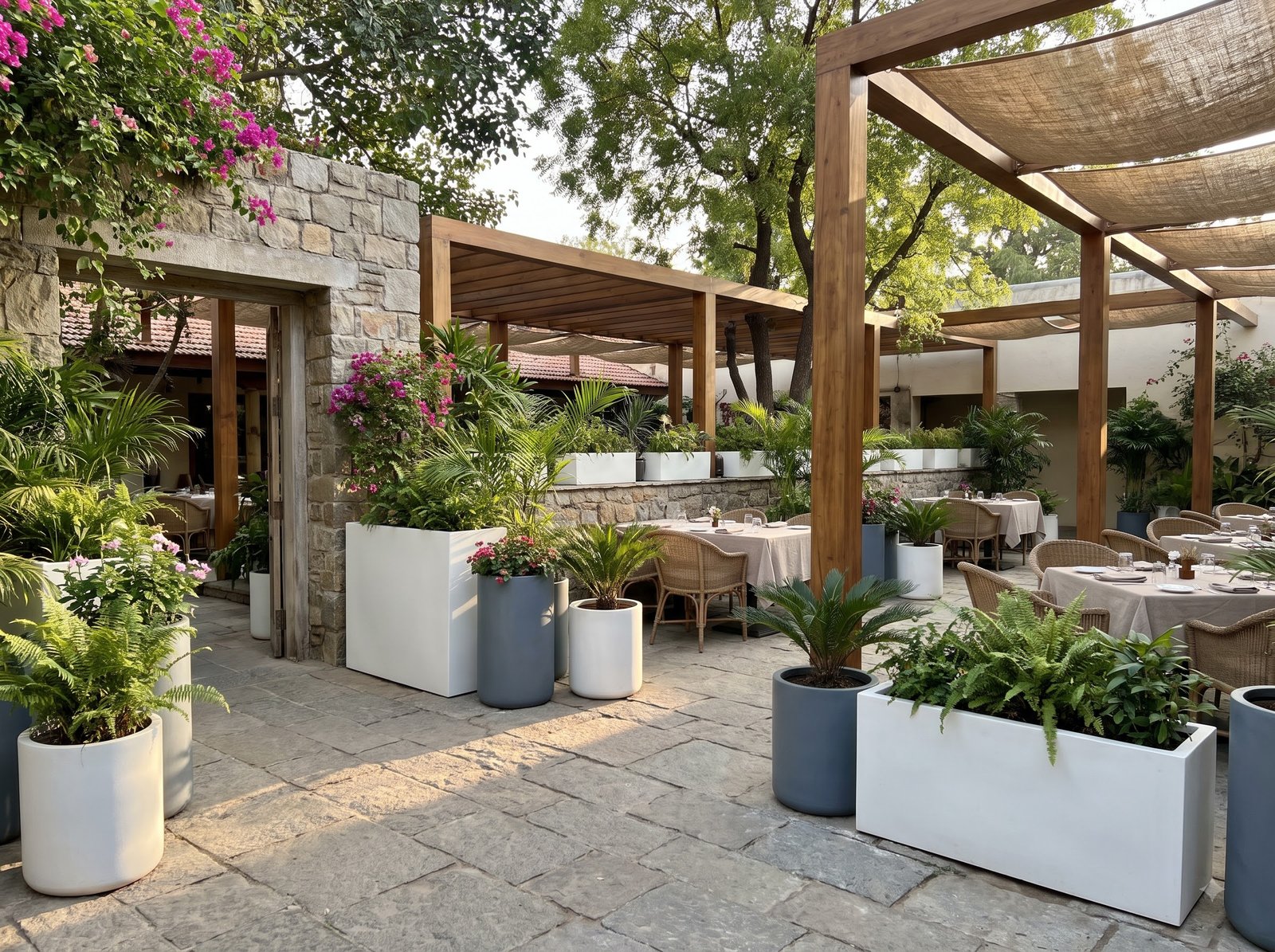
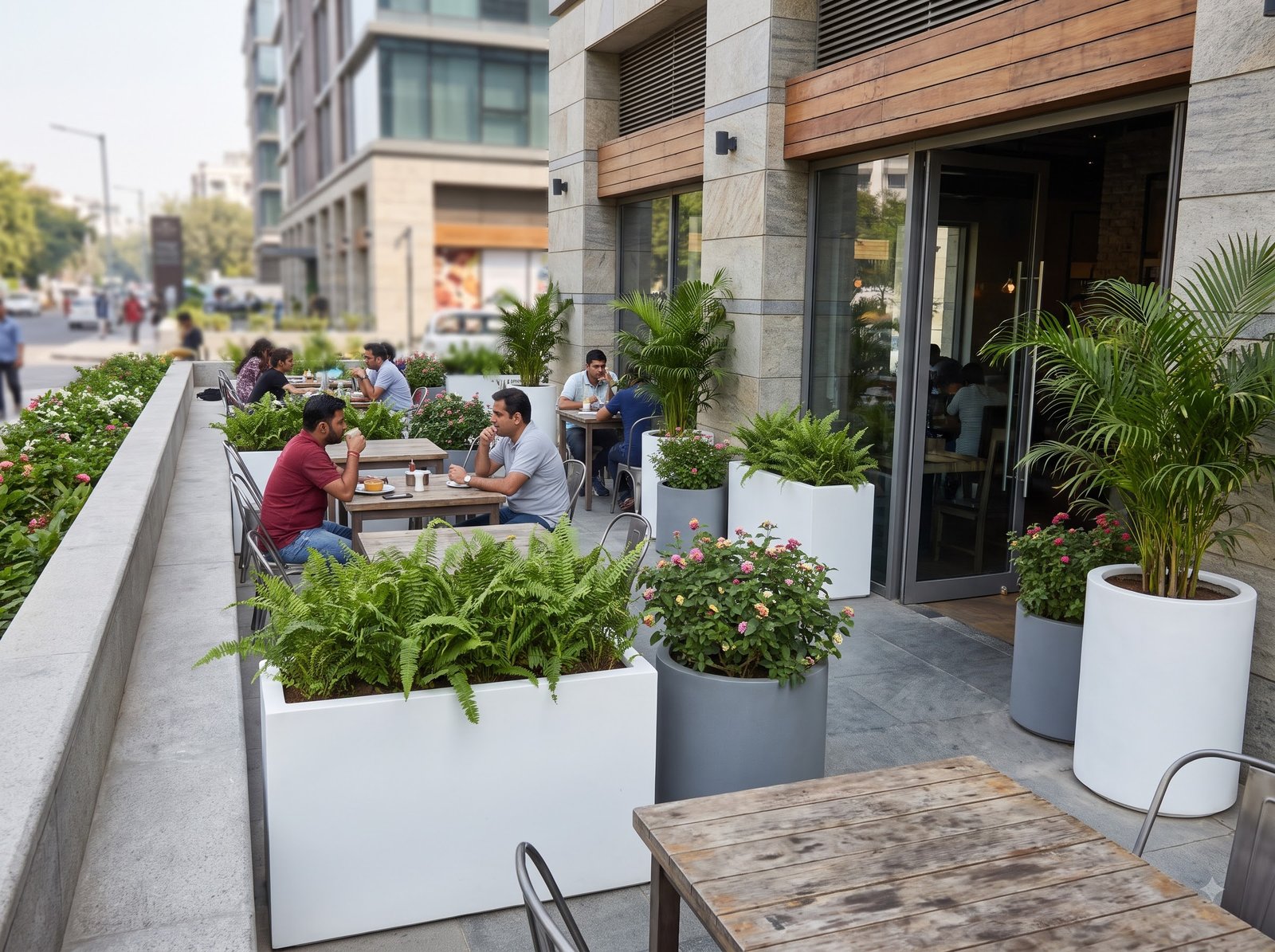
Restaurants often require clever space management to separate bustling walkways from private dining booths. Linear, rectangular FRP troughs act as sophisticated architectural dividers, maintaining an open visual flow while granting patrons a sense of privacy.
Application 3: Al Fresco Courtyards and Outdoor Cafe Terraces
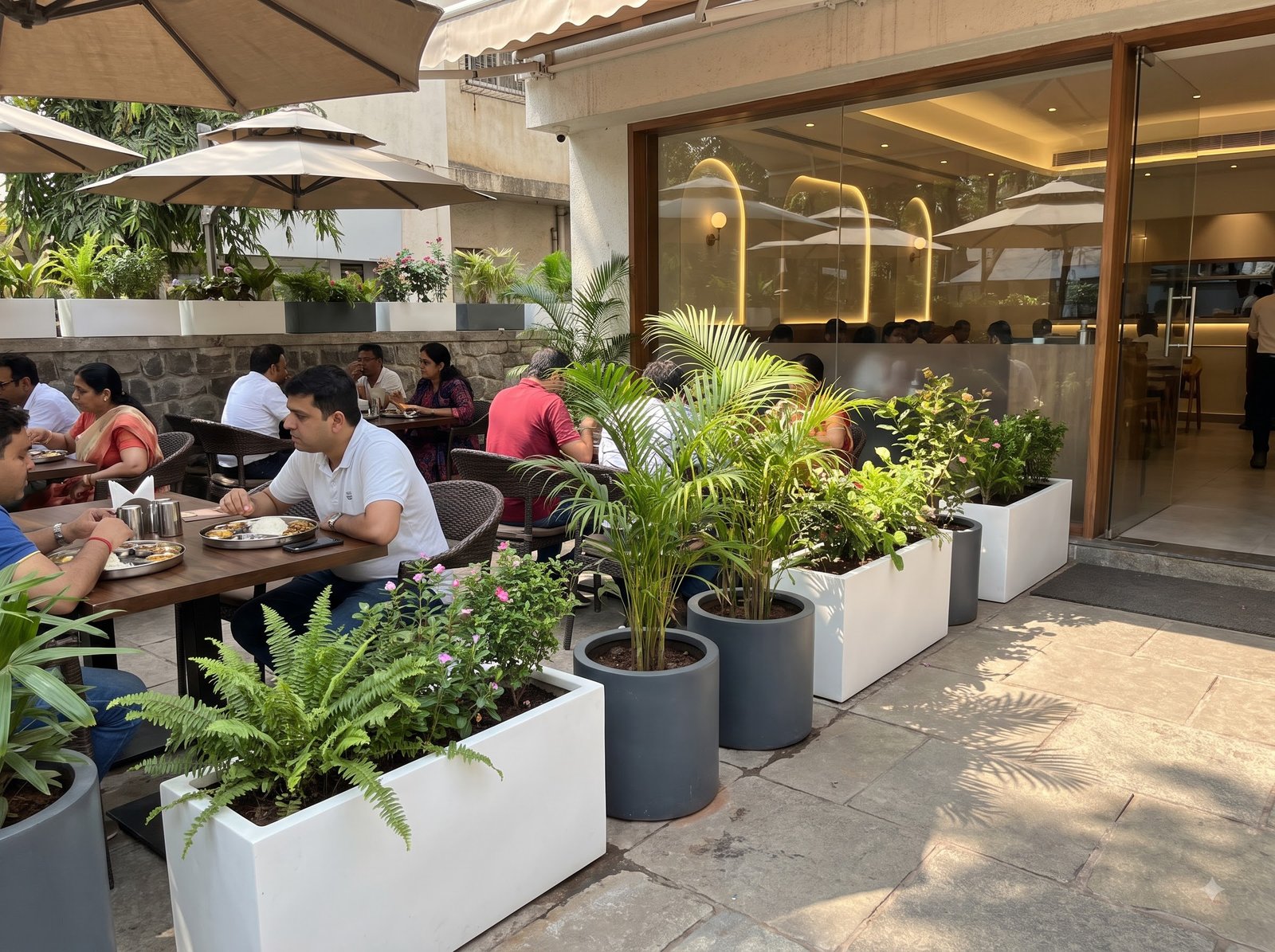
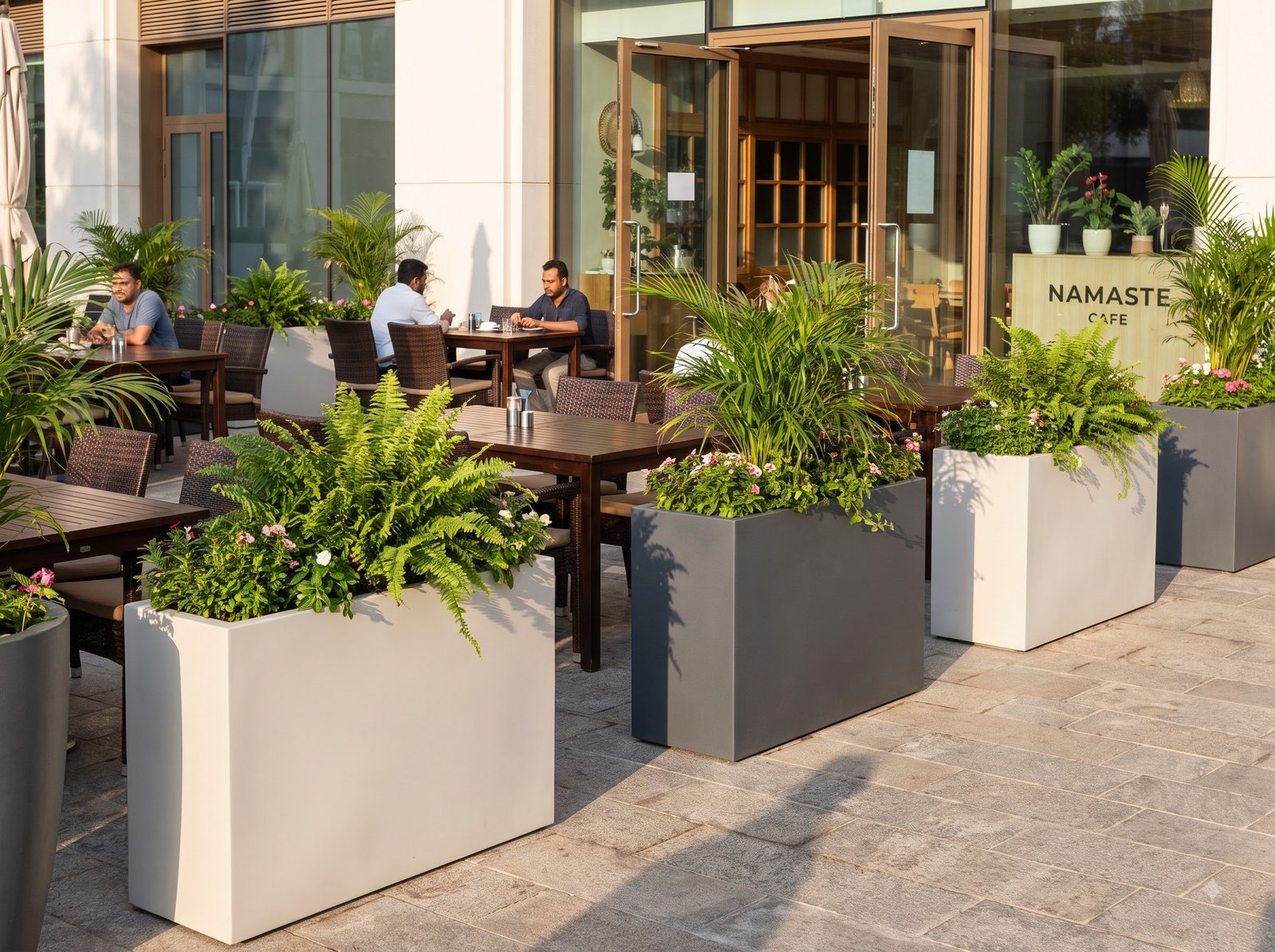
Outdoor dining areas face harsh environmental stressors. Weather-proof outdoor restaurant planters provide stability and structural presence, anchoring tables against wind while establishing a lush, garden sanctuary atmosphere.
Conclusion
Investing in high-grade FRP planters is a strategic upgrade for any cafe or restaurant looking to elevate its design footprint. By uniting structural longevity, lightweight flexibility, and sophisticated visual appeal, fiberglass containers bridge the gap between architectural functionality and organic beauty.